A Guide to Paintbrushes: How to Choose the Right Brush for Your Art

Every great painting begins with a brushstroke. Whether you’re creating your first watercolor landscape or experimenting with acrylics, choosing the right paintbrush can make a remarkable difference in your artwork.
Paintbrushes come in many shapes, sizes, and materials, each designed to create different effects. Understanding these differences will help you paint with greater confidence and explore new creative possibilities.
Understanding Different Types of Paintbrushes
Round Brushes
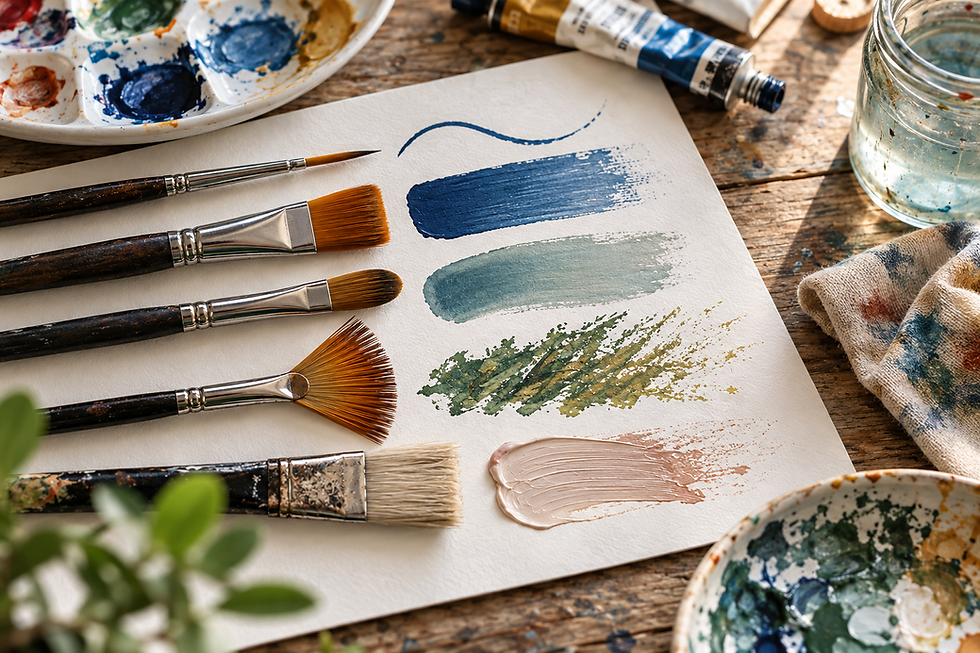
Round brushes are among the most versatile tools in an artist’s collection. Their pointed tips allow you to create delicate lines and intricate details, while applying more pressure produces broader strokes. They’re especially useful for sketching, outlining, and painting organic shapes such as flowers and leaves.
Flat Brushes
With their straight edges and rectangular bristles, flat brushes are ideal for covering large areas and creating bold, expressive strokes. They’re excellent for painting backgrounds, architectural elements, and geometric compositions. You can also turn a flat brush sideways to create surprisingly thin lines.
Filbert Brushes
Filbert brushes combine the characteristics of round and flat brushes. Their oval-shaped tips produce soft edges and smooth transitions, making them particularly useful for portraits, landscapes, and blending colors. Many artists appreciate their ability to create natural-looking shapes without harsh outlines.
Fan Brushes
Fan brushes have bristles arranged in a wide, fan-like shape. They’re primarily used to create textures and subtle effects, such as grass, foliage, clouds, and flowing water. With a little experimentation, they can add interesting details and movement to almost any painting.
Natural vs. Synthetic Bristles
Another important consideration is the material of your brush.
Natural bristles are traditionally valued for their ability to hold paint and water. Certain types are particularly well suited to watercolor painting, while stiffer natural bristles work beautifully with oil paints.
Synthetic brushes, typically made from nylon or polyester, are durable, affordable, and available in a wide variety of shapes. Modern synthetic brushes perform exceptionally well with acrylics and watercolors, making them an excellent choice for beginners and experienced artists alike.
How to Take Care of Your Brushes
Good brushes can last for years when properly maintained. Clean them immediately after painting, using water for acrylics and watercolors or an appropriate cleaner for oil paints.
Avoid leaving brushes standing in water, as this can damage their bristles and loosen the handles. After washing, gently reshape the tips and allow the brushes to dry horizontally.
Discover Your Own Painting Style
There is no single perfect brush for every artist. The best way to discover your favorites is through experimentation.
Try painting the same subject using different brushes. Notice how each tool changes the texture, movement, and overall character of your work. Sometimes an unexpected brushstroke can become the most interesting part of a painting.
At our art studio, we encourage students to explore different materials and techniques in a welcoming, creative environment. Our painting classes help beginners develop essential skills while giving experienced artists the freedom to discover new approaches.
Join one of our painting classes and discover what you can create with just a brush, some paint, and a little imagination.
Comments